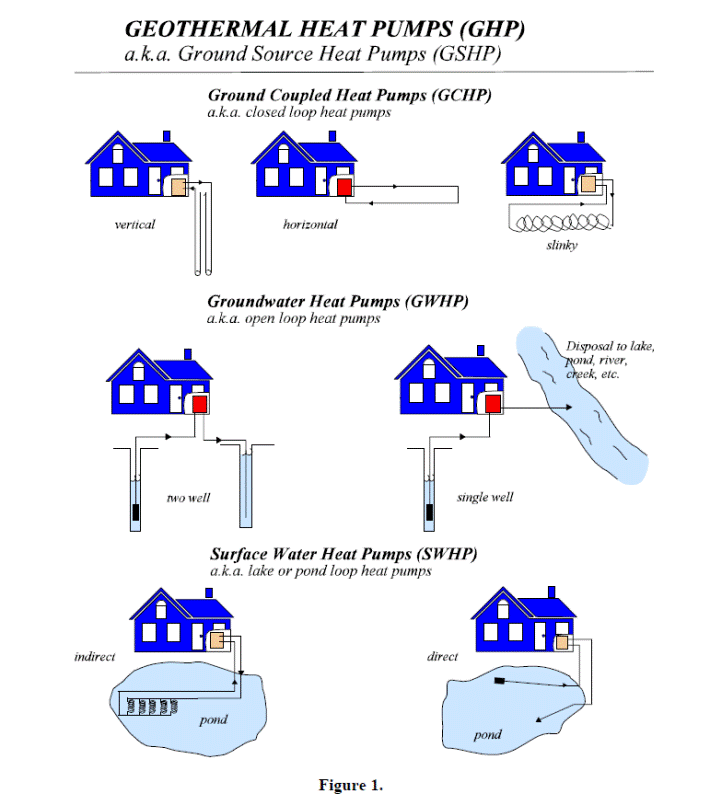
We are aiming for a ground source geothermal heating and cooling system. These ground source systems represent advanced approaches so are not very prevalent yet. Some folks however, pioneers, have installed such systems in their homes.
The fact that 5 feet underground the earth remains at a more or less constant 50 – 55 degrees Fahrenheit no matter the heat or cold above, means we can use that ground heat in winter and cool in summer.
By either submerging fluid carrying pipes underground cooling (AND Heating) systems can pull in 55 degree fluid from the ground source, cool it a bit more if needed via a heat pump and then distribute it throughout the building returning the heated fluid back to the top of the ground circulation for a cooling route through the ground. There are many ways to link to ground As pictured:
The Woods Hole demonstration site use a well as pictured:
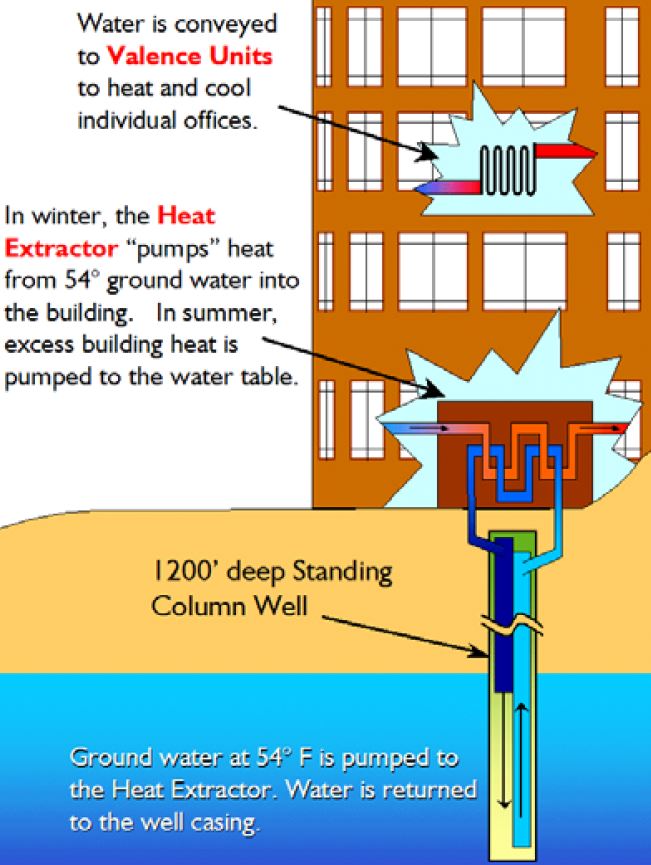
This takes advantage of the “heat sink” or “cool sink” that the earth is right under your feet. An AIR conditioner uses air as its heat sink and think of how much energy it uses to get coolness out of humid 95 degree air!
So now once inside the challenge becomes how to distribute the coolness, especially if you own a home that does not use forced air to heat or cool. Enter the chilled beam.
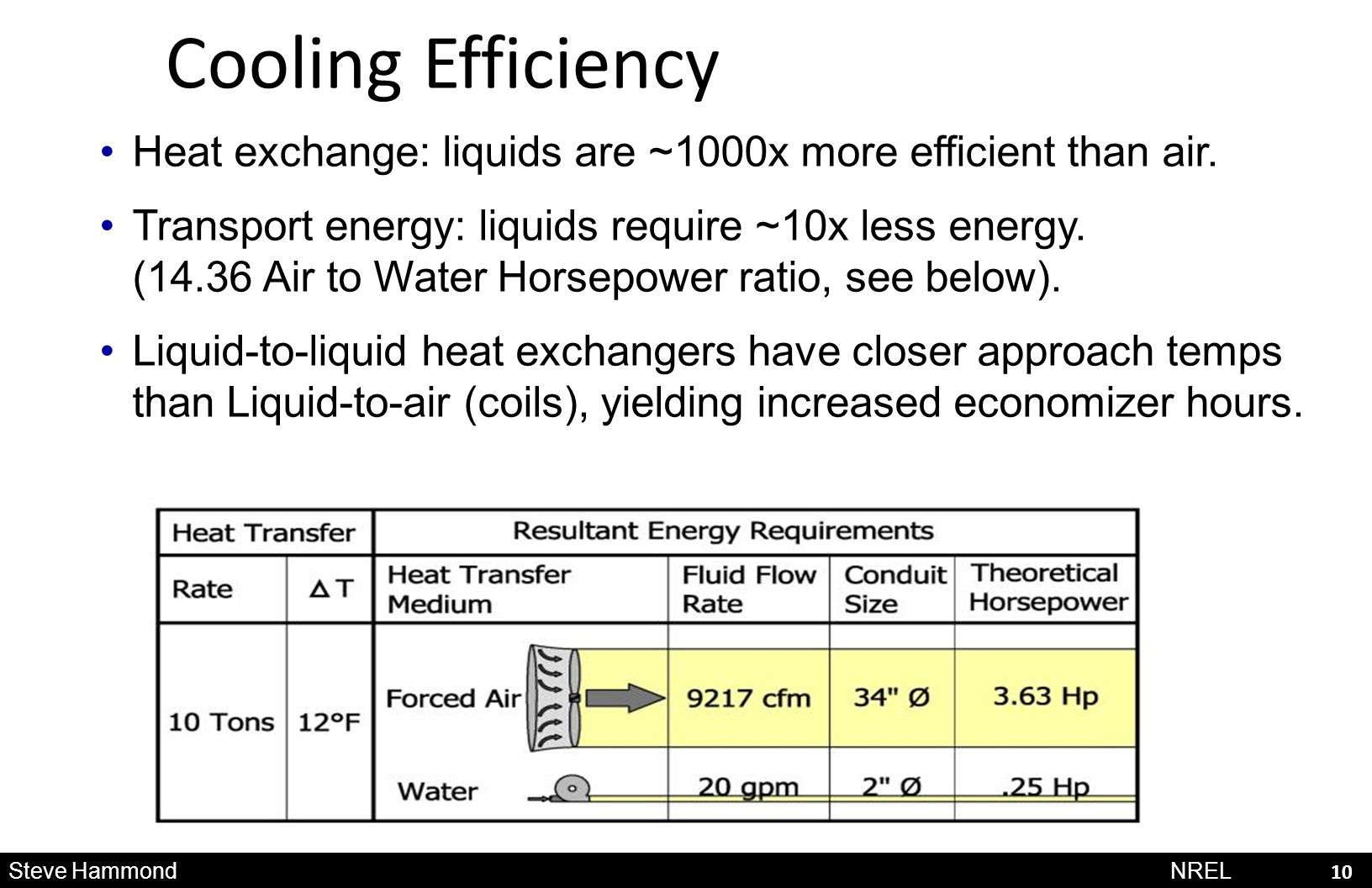
I am very comfortable with using liquid as a means of transporting and tranferring heat and cooling. This is because Fluid as an energy transfer transport medium delivers heat or coolness much more efficiently than forced air. According to The National Renewable Energy Center – Green Data Center and Energy Efficient Computing, Steve Hammond, liquids exchange heat or cool, i.e. transfer, 1,000 times more efficiently than air. One can ship this thermal energy via liquids 10 times more efficiently than transporting them by air. Net: air as a heating or cooling medium is radically less efficient and more expensive than liquid.
So just as I use forced hot WATER to deliver heat to the baseboards, I want to use chilled water to deliver coolness. Heat rises so radiant floors or baseboards work well for heating as the warmed air rises from the ground into the room. We need the reverse for chilled air as colder, heavier air sinks.
Chilled beams are like a summer time baseboard unit, from the ceiling delivering coolness via exchanging the chilled fluid with the air above.

Passive relies on the natural air convection in a room, heat rising cool falling; active uses fans.
Lots of challenges here in that one needs to keep humidity levels low to avoid condensation.
I attached a description of the Gilman Ordway demo building at Woods Hole.
 Here's What I Found