When we bought our Hingham Massachusetts home in 1979 it came with a washer and dryer that dated from the early 60’s. We think. The washer took an early trip to the scrap heap and we have seen two other washers take its place. But the same dryer is still going, 41 years since we bought the home and over 55 years since the Rowes installed it here. It only occasionally hiccups, as when it broke its turning belt about 18 years ago. We fixed that.
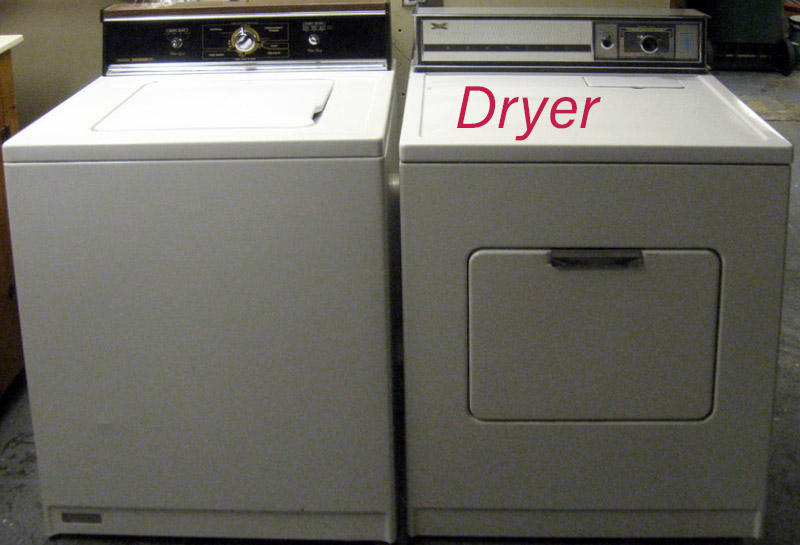
Source: AutomaticWasher.org
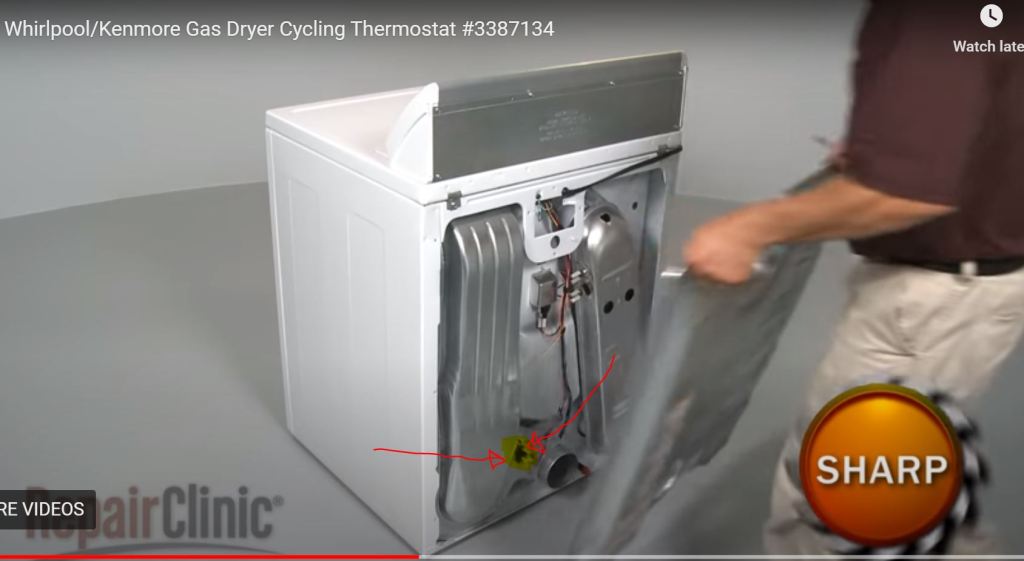
Tricia let me know last week that the dryer was getting massively hot, overheating. I immediately suspected a thermostat and the trouble shooting sites supported the thermostat hunch…. so long as the vent was not clogged, which it was not. Now, to find where the thermostat sat in the innards and find its replacement part. It’s getting harder to find manuals and parts for a 55 year old Kenmore Heavy Duty Gas Dryer. But dryers, especially gas dryers, have not changed much over the years and, sure enough a Repair Clinic Video showed the way to the part, which Whirlpool (the maker of this “Kenmore”) conveniently placed on the outside of the vent behind the panel.. as pictured near the bottom left here:
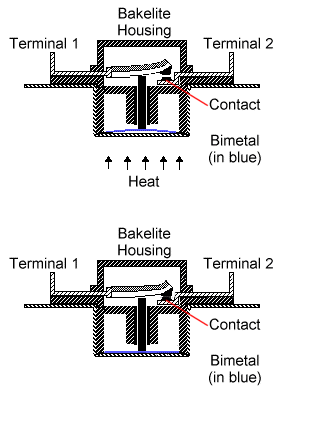
The thermostat sits right in the vent channel constantly measuring the temperature of the outflowing air. Newer dryers use two, a cycle and a limit thermostat. The old dryer we use relied on only one, the cycle or operating thermostat. This thermostat, as described in The Appliance Clinic, “… controls the temperature of the air inside the drum. The operating thermostat is mounted just behind the lint filter and down under the door. The operating thermostat is in series with the heater element. The operating thermostat normally opens [as in, shuts down the heating circuit] from 120 to 170 degrees [Fahrenheit] and is always closed [meaning allowing the dryer’s heater to run] at room temperature.”
Confident that the thermostat was the problem and armed with a video on where to find it, I removed the back of the dryer. (You will note it does not shine as cleanly as the 1961 picture of the ‘new’ version of the dryer; some pipe leaks had done their best to rust the dryer. But, rest assured the dryer works beautifully.) I found the thermostat and removed it.


And now… to find the new replacement part. Using the product model number (below) in the search window I found that most of the thermostats available used four electric leads rather than my simple two and most did not quite match our thermostat in looks.


Source: Amazon
I did not feel comfortable taking any of these ‘not quite right’ versions and since I could not find the right exact match. I called Parts Select who had helped me on the last major appliance repair project. Jessica from Parts Select explained that as models get older demand for parts fades and they do not get featured (as in photos etc.) on the sites. But they exist. She found it and sent me this picture to get my OK that it was right.
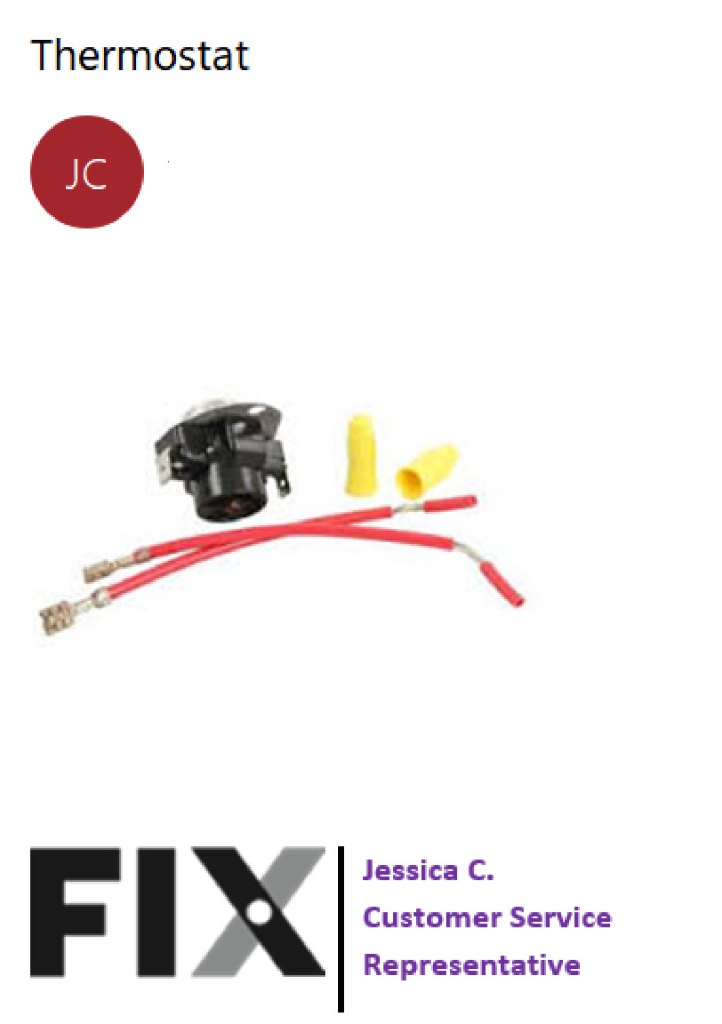
It was. I ordered it – at a whopping $70 vs. the $14 I saw other newer ones for. She explained that as demand wanes for older models, manufacturers increase the price for these older parts. No problem. $70.00 divided by 59 years comes out to $1.19 a year!
It came and looked exactly right.

I installed it. And based on an overnight run Tricia says it now works fine. And as you can see below, she looks pretty overjoyed about it.

Mission accomplished….. for NOW.
 Here's What I Found