All those safety rules and guidelines (National Safety Council) can seem boring and irrelevant, overkill… like the yada yada of on line terms and conditions pages that most just skip through and click. But skipping on taking safety guidelines seriously will at some point will cause you major problems. This weird tale of events will show how and why to take one of these rules very seriously.
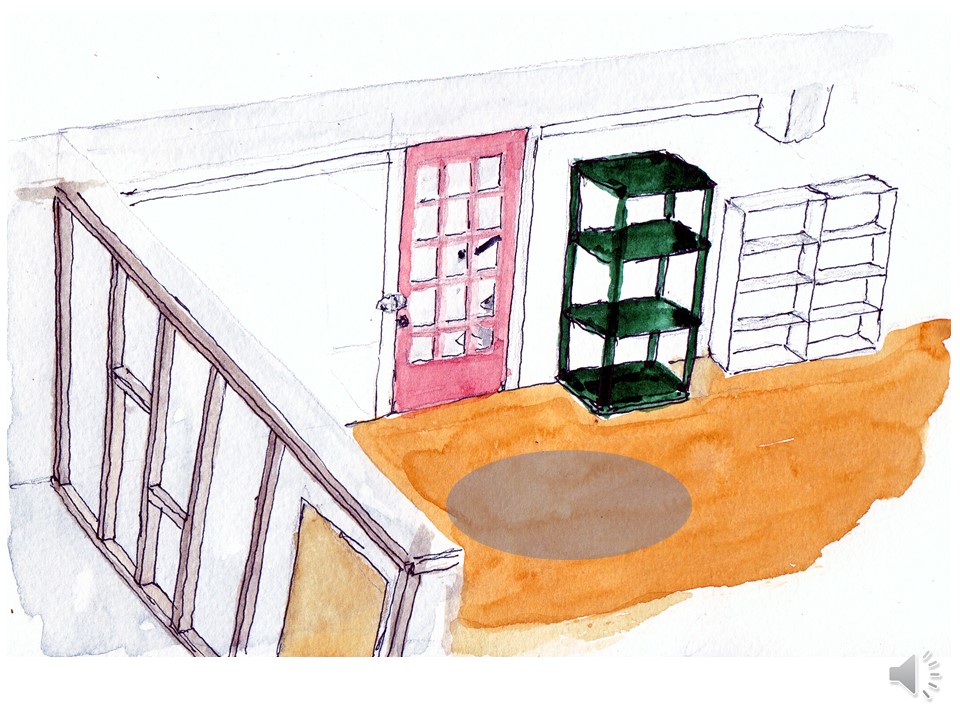
Late at night on July First after a party we were putting things away in the cellar and noticed this growing puddle of water. I guessed it must be coming from the cellar’s recessed entrance.
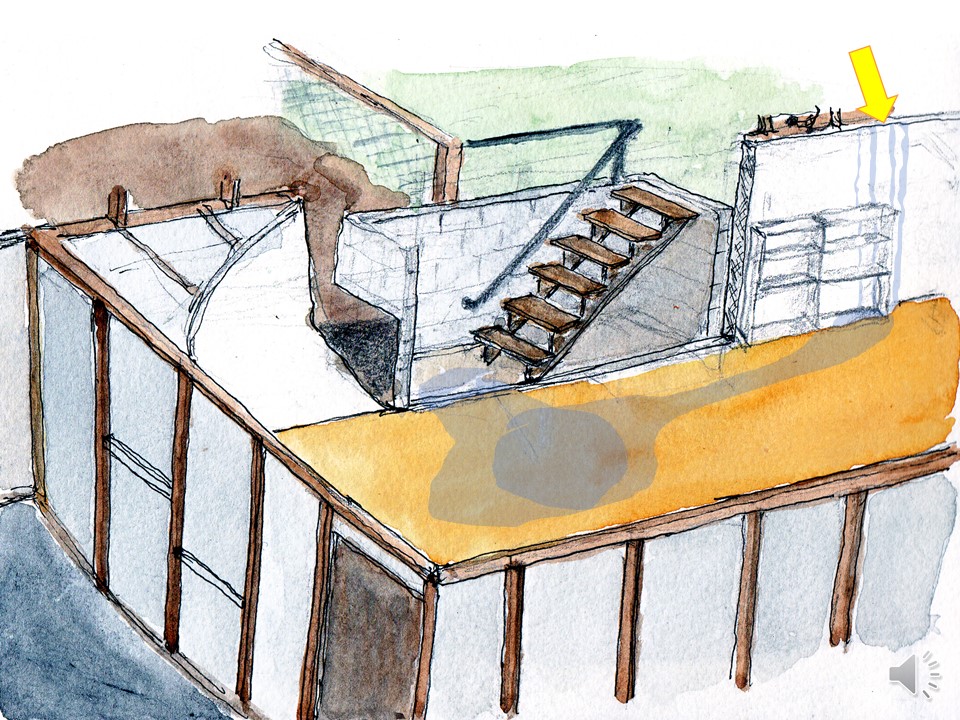
But the entrance appeared totally dry. Tricia saw that the water was coming from the front near the wall. And in fact water was rolling down the concrete walls from above.

Looking through a hole in the cellar room ceiling we saw lots of pipes as potential source above.
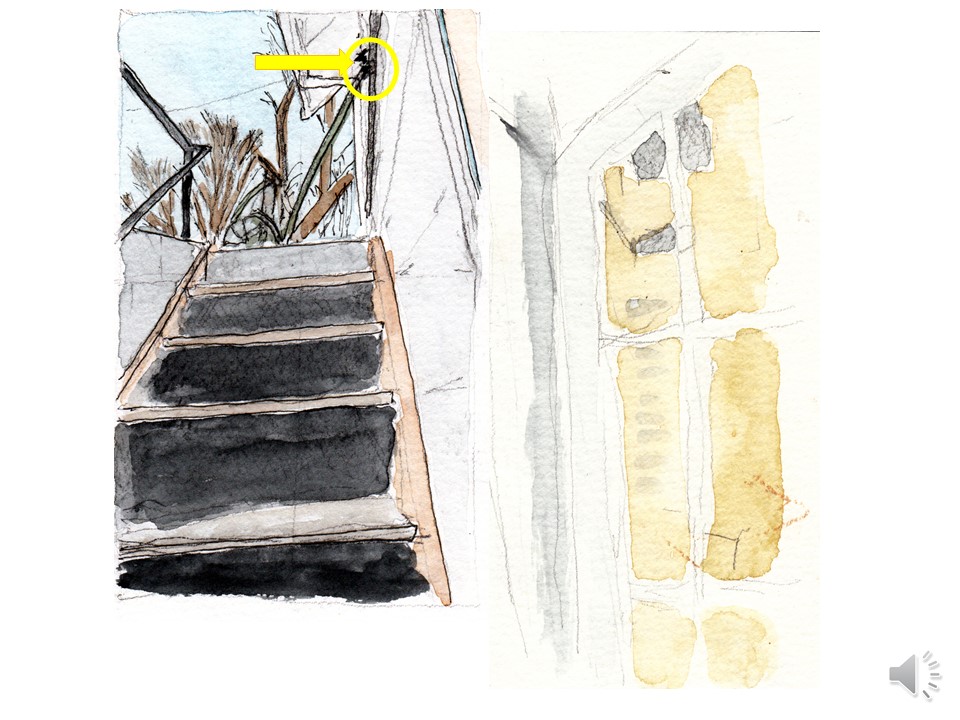
We thought it might be the outdoor hose faucet at the top of the cellar stairs which was near that leaking spot in the wall. But that pipe proved dry and solid.
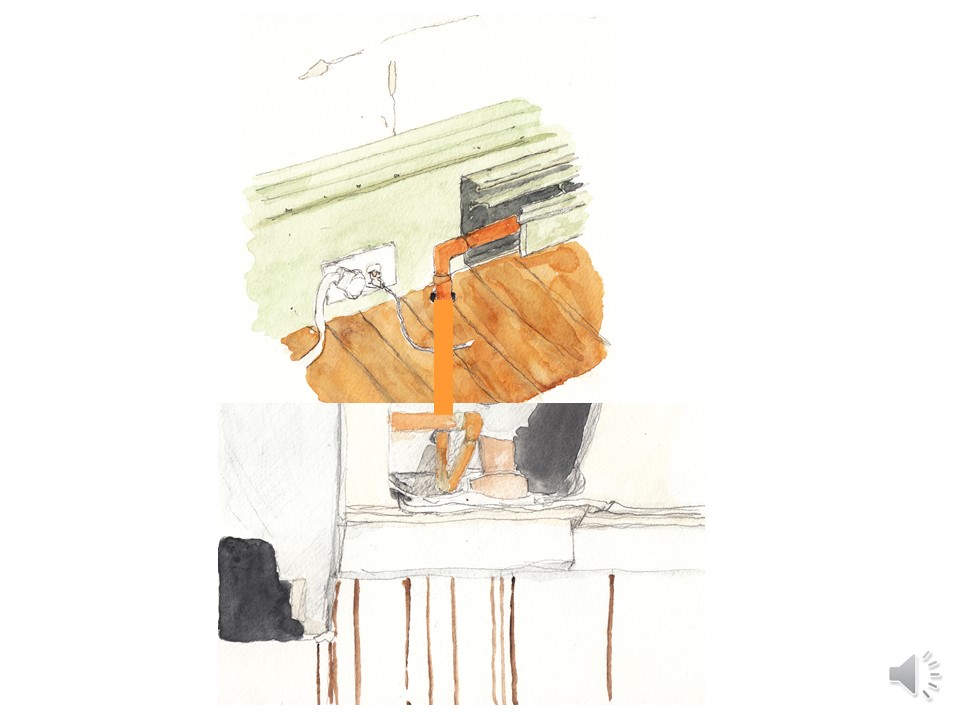
Looking up again at the wettest copper pipe we realized that this connected to the baseboard heating unit in the living room directly above us. So somehow this hot water heating loop sprung a leak. I guessed, very WRONGLY, that rough plumbing might have torqued a joint in the heating piping. Plus I further assumed that the water in the walls had caused the electric outage we now saw in the living room.
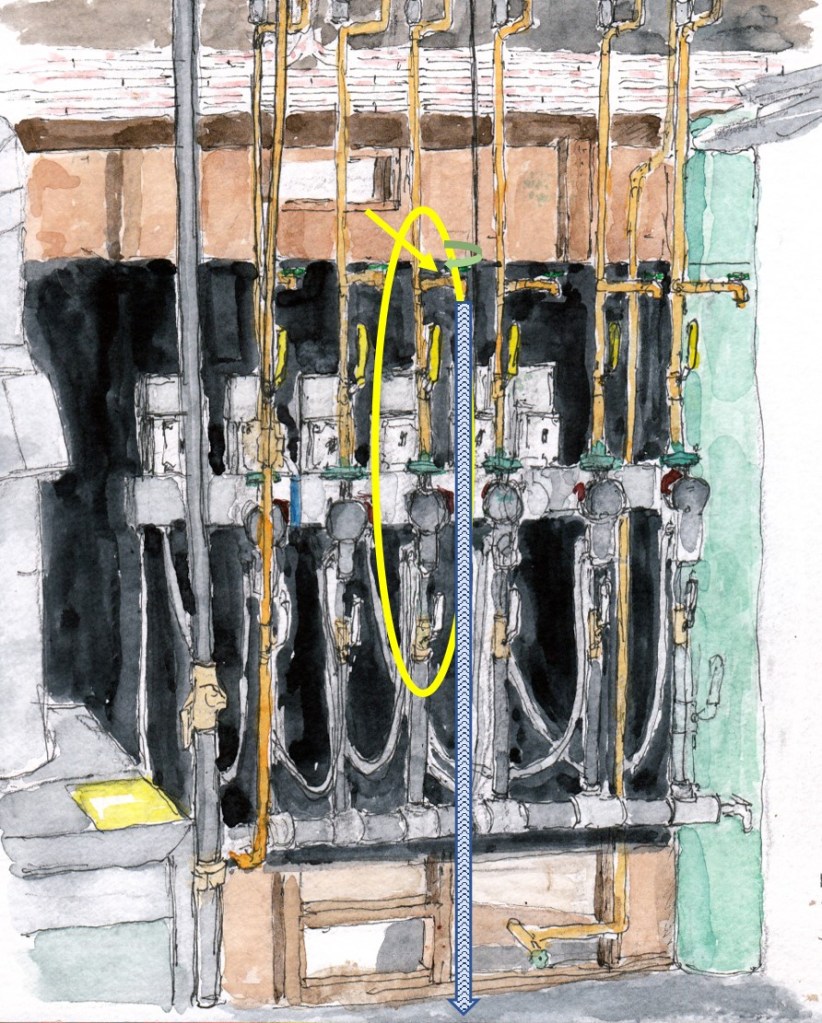
We felt better that it was a heating system leak because we could simply isolate that heating zone, zone 3 the front of the first floor, by closing the valve and then drain all the water from that circuit. But the water kept coming and would not stop; bucket after bucket. Then Tricia suggested shutting off the incoming cold water supply valve. Well that did it as the water outflow eventually stopped and we focused on lots of cleanup.
We left the heating system as it was until we could get a plumber to fix it all. In October, 3 months later, Paul Dickhault a wonderful plumber came and looked for the leak in the living room heating pipe. He found it quickly as a small hole at the base of the pipe at floor level.
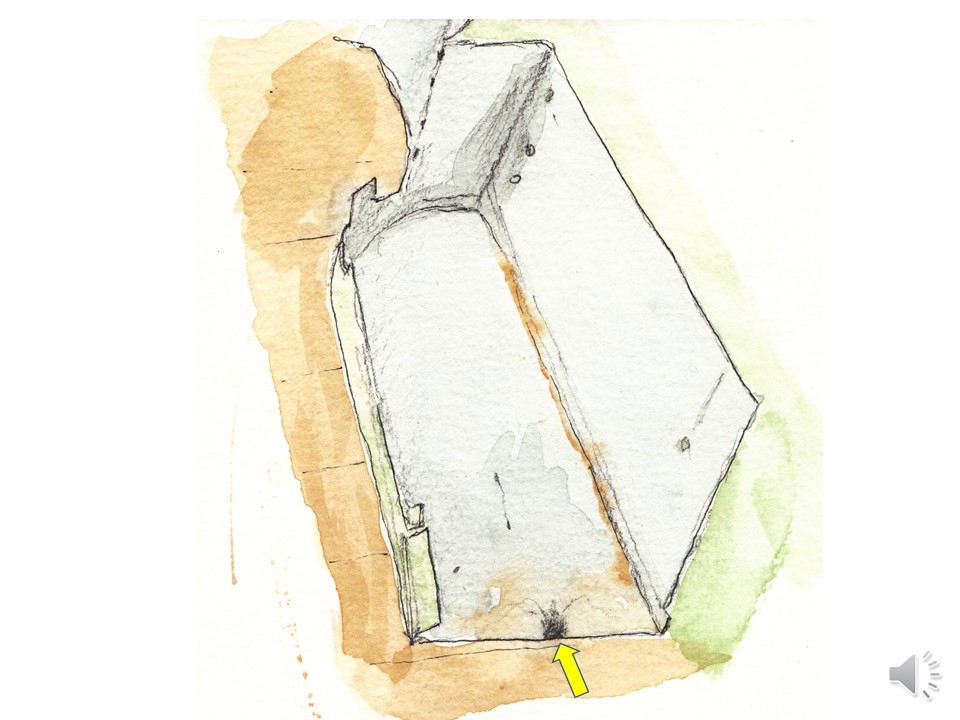
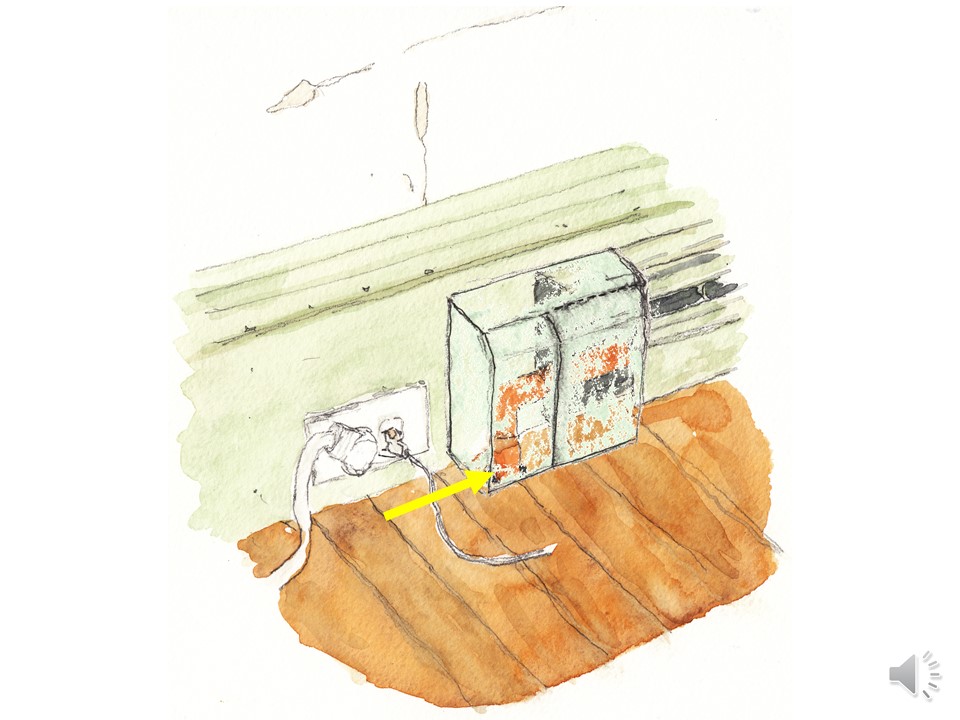
I showed Paul a distincive burn mark at the bottom of the baseboard heater cover we had just removed. He looked at it and said that looks like an arc burn mark!
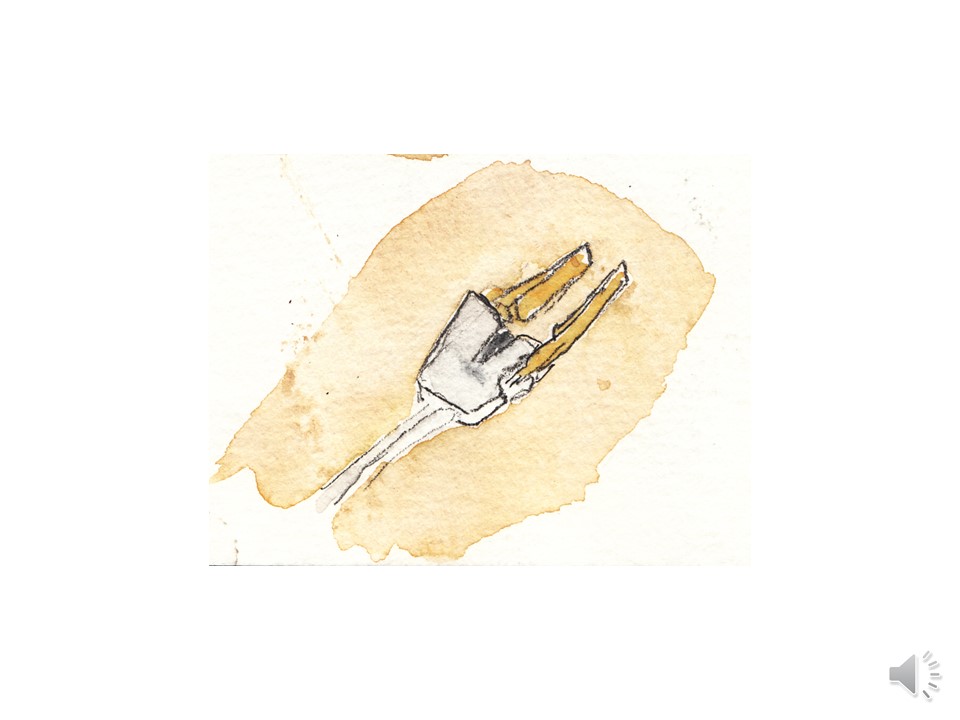
Then he looked more closely at the extension cord plug at the outlet nearest the heater cover.
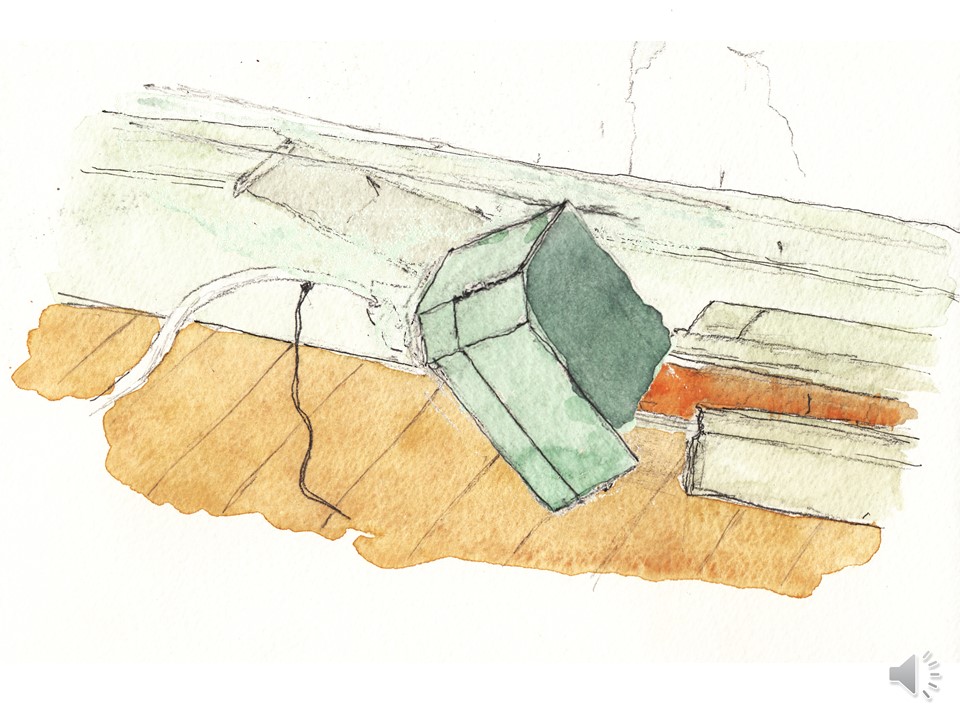
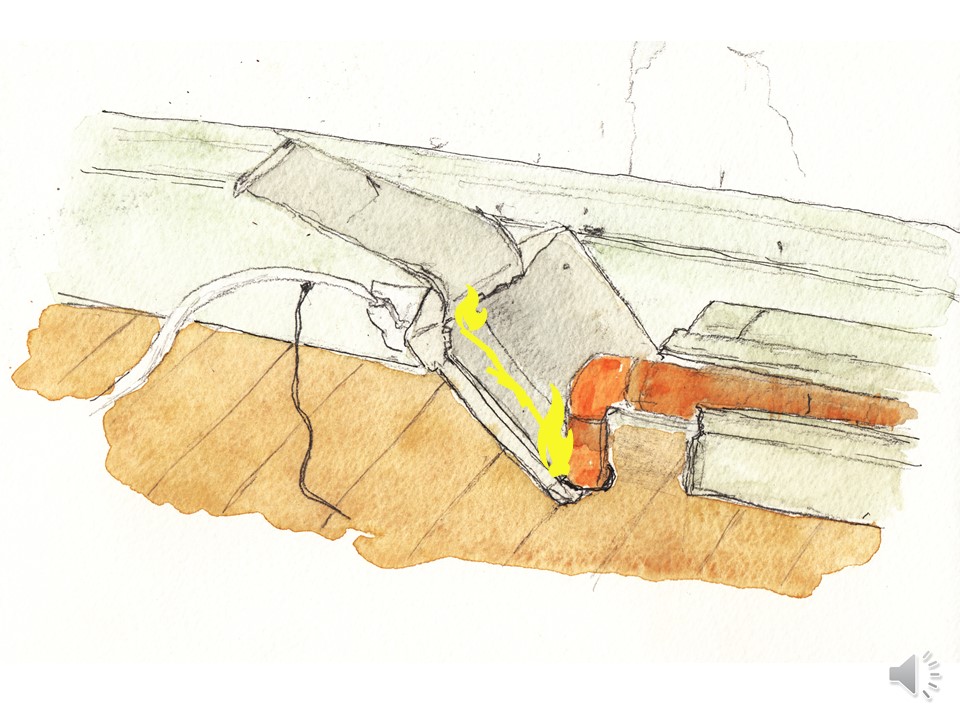
…and he said I can tell you exactly what happened, the metal heater end cap got knocked back into the broken exposed extension cord plug and carried an electric current down next to the copper pipe. Copper is an excellent conductor and so is the water behind it. That caused an electric arc from outlet to extension plug to end cap to copper pipe. The arc is so hot, almost 10,000 degrees Fahrenheit that it burned a hole right into the copper pipe and so the leak began. And that is what tripped the relay for the electric circuit in this room.
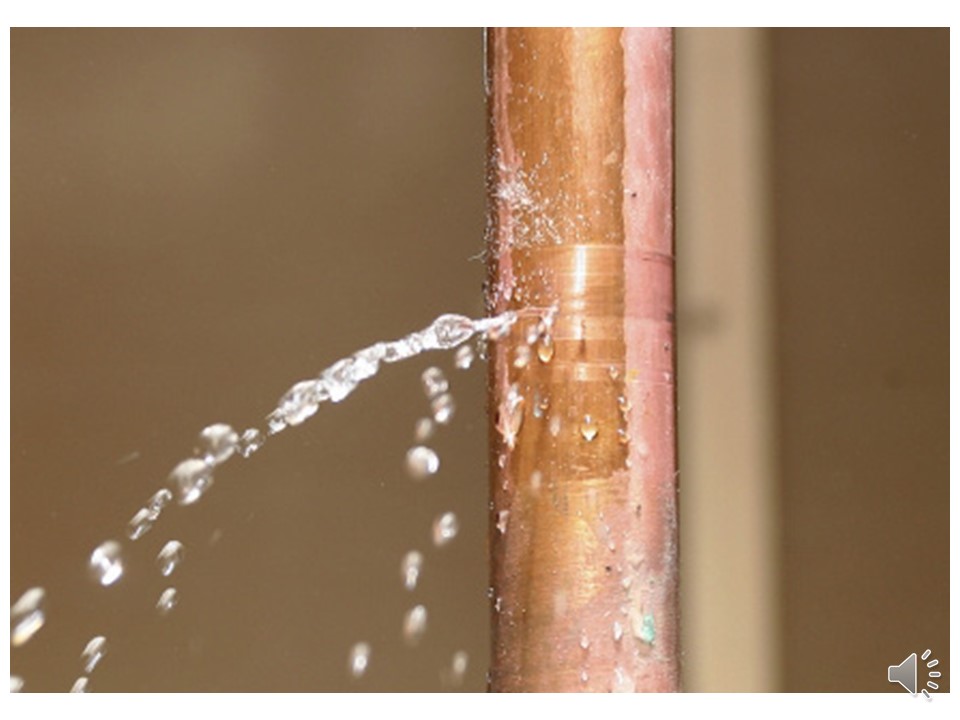
This could have been much worse as if anything were around the arc, like Christmas trees or the like it could definitely have caused a fire. You were lucky.
| 542 |
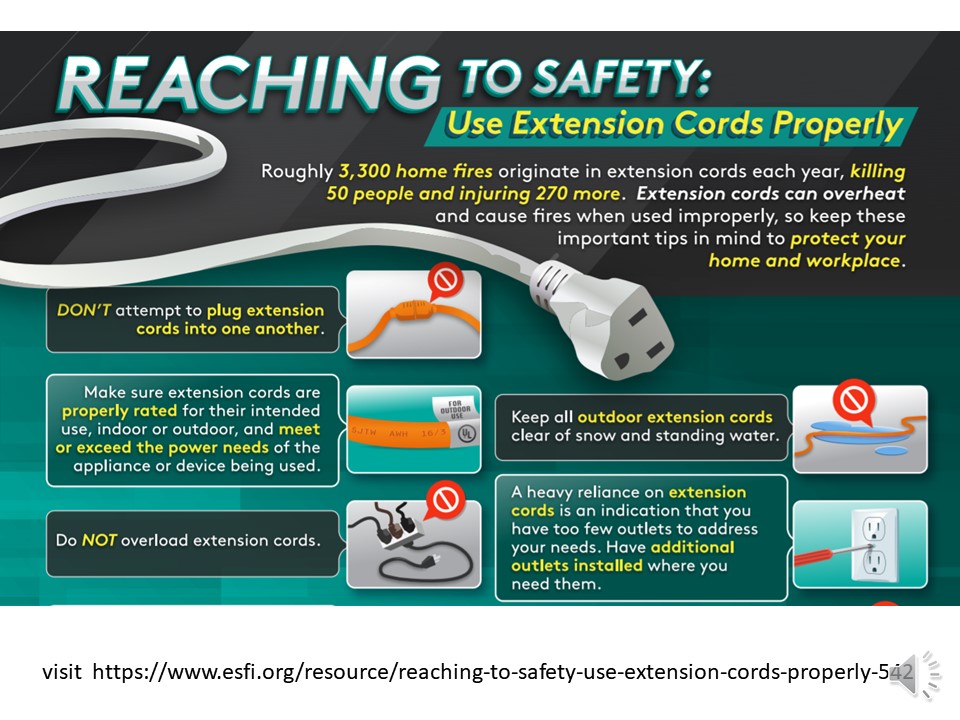
So my lesson is to listen to slow down and obey the safety tips. Use extension cords only as a temporary cure. According to the Electrical Safety Foundation International says “A heavy reliance on extension cords is an indication that you have too few outlets to address your needs. Have additional outlets installed where you need them.”
Get hard wired; get rid of cheap or old extension cords and use only high quality highly durable ones. And pay attention to safety tips. So wishing you safety and health and not accidents…. John Daly
Extension cords are for temporary use only and to use them….
Do:
- Check cords for damage before use.
- Ensure cords are high quality, long lasting, not cheap.
- Make sure the cord is completely plugged into an outlet.
- Unplug extension cords when not in use, and store the cords indoors.
- Keep cords away from water. Ground fault circuit interrupter protection should be used when extension cords are in wet or damp environments.
Do Not
- Don’t plug one cord into another.
- Don’t run extension cords through walls or holes in the ceiling, and don’t run them across floors or doorways.
- Don’t force a plug into an outlet.
- Don’t overheat an extension cord.
- Don’t cover a cord with a rug or carpet.
For more information on extension cord use, visit http://sh‐m.ag/2wEhesM.
 Here's What I Found